
Results
-
 £76.99
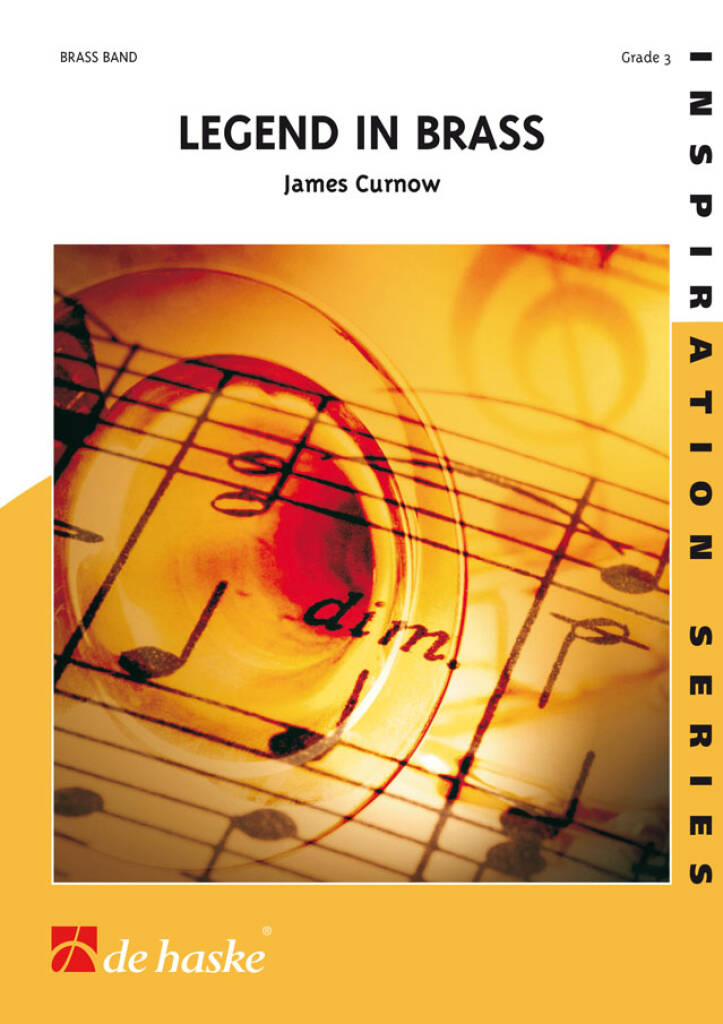
Legend in Brass - James Curnow
Legend in Brass by James Curnow for Brass Band.
Estimated dispatch 5-14 working days
-
 £60.99
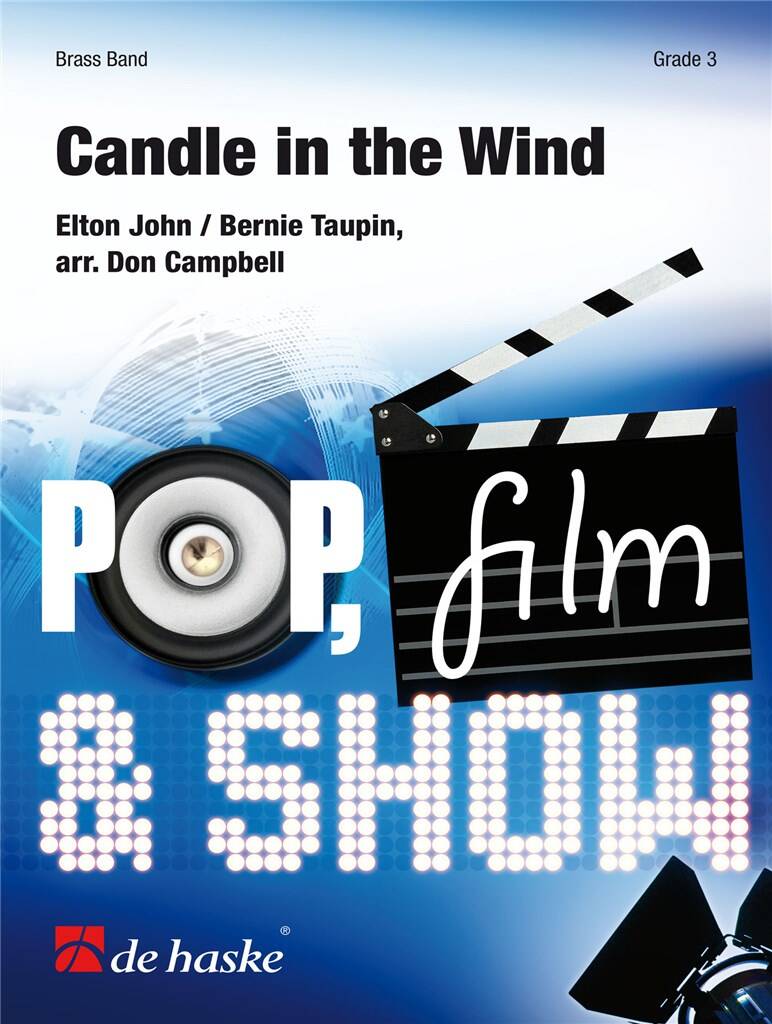
Candle in the Wind - Elton John - Don Campbell
Candle in the Wind, the song Elton John origainlly wrote and dedicated to Marilyn Monroe, achieved worldwid fame when a special version was played at the funeral of Princess Diana. This arrangement by Don Campbell retains all the beuty of the original and will fit into any concert programme.
Estimated dispatch 5-14 working days
-
£76.99
Elton John in Concert - Elton John - Don Campbell
The songs of Elton John have been in the charts for over 30 years and are still as fresh and entertaining as when he released his first record. Today he is reaching a new generation of fans with his music for many hit films. The combination of up-tempo songs and love songs makes this medley an ideal light interlude that will be adored by your entire audience.
Estimated dispatch 5-14 working days
-
£72.99
The Eagles in Concert - Ron Sebregts
The Eagles In Concert features three Eagles hits - 'Peaceful Easy Feeling', 'Desperado' and 'Hotel California' arranged by Ron Sebregts for Brass Band.
Estimated dispatch 5-14 working days
-
 £60.99
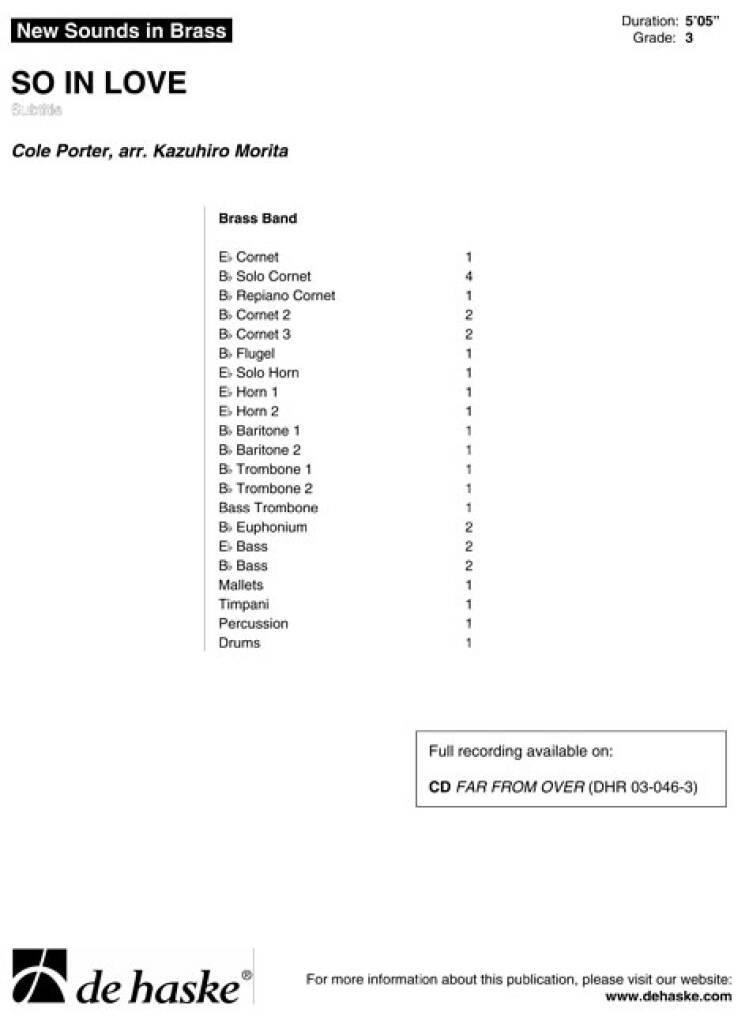
So in Love - Cole Porter - Kazuhiro Morita
Cole Porter was one of the great masters of Broadway musicals during the thirties, forties and fifties, with So in Love, from the musical Kiss Me Kate, being one of his best loved works. It has been recorded by many artists including Bing Crosby, Lulu, Shirley Bassey and Julie Andrews, however it is the Ella Fitzgerald version that is best known. This jazzy musical classic can now be enjoyed by your brass band with this excellent new arrangement.
Estimated dispatch 5-14 working days
-
£67.50
Alice in Wonderland - Danny Elfman - Michael Brown
Lewis Carroll's novel Alice in Wonderland served as the basis for the new Walt Disney film. From Danny Elfman's soundtrack, Michael Brown used the titles Alice Returns, Alice's Theme and Bandersnatched for his enchanting medley that has been adapted for brass band by Klaas van der Woude.
Estimated dispatch 5-14 working days
-
£37.50
In The Steppes Of Central Asia - Borodin - Geoff Colmer
This wonderful work has been very skillfully arranged for Brass Band. Some very controlled playing will be required so perform this stunning work that is dedicated to Franz Liszt, containing a simply gorgeous melody that runs throughout the piece. A welcome addition to any bands library.
In Stock: Estimated dispatch 1-3 working days
-
 £29.50
Masters In This Hall - Trad. French Carol - Elizabeth Carter
Based on an old French carol, and inspired by such TV series as Downton Abbey and Pride and Prejudice, the arrangement aims to depict the servants of a well-to-do household preparing for the return of their Master and his family to enjoy Christmas at the Hall. As they go about their tasks, we hear appropriate well known carols interwoven with the main theme. Deck the Hall, Good King Wenceslas, The Wassail Song, The Holly and the Ivy and Oh Christmas Tree are all heard as the servants get into the swing of the season. This is a fastastic festive workout for all areas of the band
In Stock: Estimated dispatch 1-3 working days
-
£24.50
Whiskey In A Jar - Traditional - Wilfried Weiland
The Irish folksong appears as a arrangement for 7 piece brass ensemble. The parts are 1st and 2nd Cornet, Horn Eb (F), 1st and 2nd Trombone or Baritone, Euphonium, Basses Eb, Bb and Tuba, Percussion and Drumset. Flugel and Bass-Trombone are optional.The arrangement begins with a rock-style introduction as used by Thin Lizzy or Metallica. Verses and chorus offer variety through changing melodic voices and versatile dynamics.
In Stock: Estimated dispatch 1-3 working days
-
£29.95
Rhapsody in Brass (Score Only)
Rhapsody in Brass is in three movements and was written for the British Open Championships in 1949, held at Belle Vue in Manchester. The contest winners were Fairey Aviation Works Band under the baton of Harry Mortimer. Eric Ball came second with Ransome & Marles and Stanley Boddington 3rd with Munn and Felton Band. Rhapsody in Brass had the unusual distinction of being written as a test piece by a Salvation Army composer. Eric Ball's Resurgam was the only other piece to achieve that dual personality in that era.Dean Goffin was born in 1916 in Wellington, New Zealand, son of Henry Goffin, a Salvation Army officer and composer. At 19 he was appointed Bandmaster of the Wellington South Band and when World War II started, he enlisted in the New Zealand Armed Forces where he became Bandmaster of the 20th Infantry Battalion and later the 4th Brigade Band. During the time he served with them in the Middle East and Europe, he composed and arranged numerous pieces among which Rhapsody in Brass and the march Bel Hamid, later adapted for Salvation Army use and renamed Anthem of the Free.After the war, Dean kept on composing and his work was featured by the Wellington South Band. Later he transferred to Timaru for another job and became Bandmaster there. He was studying music at the time and as he wanted to take part in a competition for devotional selections for Salvation Army use, he sent some of his compositions to the International Headquarters. When Rhapsody for Brass was chosen as the test-piece for the British Open Championships, people at the Salvation Army started asking questions about the lack of publications of his work. It was discovered that the pieces submitted for the competition didn't meet the exact criteria. Among these pieces was one of his most appealing works The Light of the World which was published a year later, in 1950, the same year as he completed his Bachelor of Music studies at Otagu University.After entering the Salvation Army Training College in Wellington with his wife, Marjorie, Dean was in 1956 appointed National Bandmaster in the British Territory. Later he became National Secretary for Bands and Songster Brigades and in this period he organised the yearly festival in the Royal Albert Hall and was responsible for the national music schools in the UK. Dean returned to his home country in 1966 and to mark the centenary of the Salvation Army in New Zealand he was knighted by the Queen in 1983. Sir Dean Goffin died on 23 January 1984.
Estimated dispatch 7-14 working days
 View Music
 Listen to MP3